Improving Your Image Through Visual Communications


Journalist - Photographer - Writer

Sunday, 11 June 2006

Organ Pipes National Park

by Darren Stones

Locations closer to home are becoming a more attractive option for many, and as a native of Melbourne, I set out to investigate a nearby landscape and wildlife photography option that is relatively close to the city.


Australian Wallaby


The Organ Pipes National Park, approximately 20 km’s north-west from Melbourne, is a 121 ha park located in the Keilor plains region just off the Calder Highway. The main features of the park are the various rock formations which are dotted throughout and are easily accessed via the well established paths that lead from the car park located adjacent to the Visitor Information Centre.

Before setting off it’s a good idea to familiarise yourself with what the park has to offer. The Visitor Information Centre, generally open on weekends, provides a free information sheet which outlines park highlights and general information. There are also large boards depicting the history of the region and development of the park since it was declared in 1972.


Park visitor at viewing platform


On commencing your journey along the walking track you’ll come across two viewing platforms which provide a magnificent view over the plains that were formed by the massive lava flows from volcanoes around the Sunbury area. Jackson’s Creek has cut a deep valley through the park and this has revealed the splendid rock formations which become evident upon following the path to the bottom of the valley.

There are numerous blue wrens to be seen throughout the park and ideally a fast long zoom or fixed length lens will provide the best results. Also, keep an eye out for the various mosses which can be seen growing on the ground and in the trees. A quality macro lens will give the best results, so make sure you take one along if you own one.

Lichen growing in tree


As you continue along the path towards the Organ Pipes formation you’ll notice the revegetation of the park that is taking place. Much of this work is conducted by a volunteer group called ‘The Friends Of The Organ Pipes’ and their efforts to restore the park are recognised as being one of the most successful restoration projects in Victoria.

Park revegetation program

The park gained its name due to the rock formation known as ‘The Organ Pipes’. This towering rock feature is a result of a lava flow about a million years ago and the subsequent erosion, caused by the flow of water from Jackson’s Creek, has revealed the large basalt columns. Best time to photograph this is in the early to mid afternoon due to some large nearby trees that cast a shadow on a sunny day.

The Organ Pipes

Further along the track you’ll notice some attractive native trees. At last count there were 145 species of native plants recorded within the park. Volunteers have been diligently working towards re-establishing the native trees and shrubs, however it hasn’t been an easy task. A continual weeding program exists, which contributes substantially to the regeneration.

Australian native tree


The ‘Tessellated Pavement’ is a sight to behold. This formation is the top of basalt columns that have been filed down by the water of Jackson’s Creek. Extreme caution should be exercised when walking over this feature as it is quite rough in places and can get very slippery after rain.


Tessellated Pavement


Later in the day after most people have left the park you may be fortunate to spot a wallaby. If you do, move as little as possible and you’ll be able to capture a photograph of one of our native marsupials.

The Organ Pipes National Park is open from 8.00am to 4.30pm each day and during summer months closes at 6.00pm on weekends and public holidays. Toilet facilities, picnic tables and barbecue areas are provided for visitors, however you do need to bring your own gas barbecue, as solid fuel fires are not permitted in the park.

So, if you’re looking for somewhere close to town for a photographic opportunity, try the Organ Pipes National Park – entry is free.

More Information

---------------------

Friends Of The Organ Pipes

Parks Victoria - Organ Pipes National Park

Tourism Victoria - Organ Pipes National Park

Saturday, 20 May 2006

Gordon Stones - Painting for 50 years

By Darren Stones

Is a painter's work ever complete? For most artists, an oil painting, water colour painting or pastel painting eventually becomes a piece of quality artwork.

Gordon Stones from Melbourne, Australia has completed many pieces of artwork on various surfaces over the past five decades.

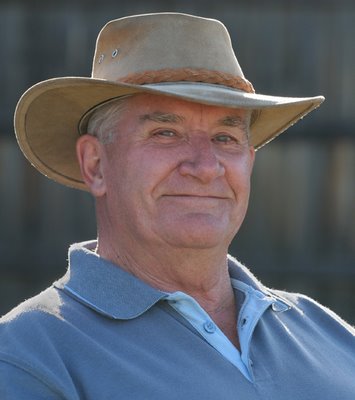
Gordon Stones


Commencing as an apprentice painter and decorator in 1956, Gordon plied his skills of the trade to various buildings in and around the suburbs of Melbourne, using brushes of various dimensions and textures.

These days his motivation for turning to the canvas is his continued desire to express his creativity with colour, but without the strain of continually climbing a ladder.

Currently, he is painting a church scene on canvas-covered board using acrylic paints.

The Master Painter


“This is actually a painting of the Catholic church in the town of Bled, which is situated on Lake Bled in Slovenia,” Gordon said.

Having retired from his life-long occupation, Gordon now has more time up his sleeve to have multiple works in progress.

“This other painting I’m currently doing, is of the blacksmith's shop and shipwright's workshops at the maritime centre in Warrnambool," said Gordon.


Two works in progress


“This is just one of several paintings I’m going to do of the buildings in the maritime centre at Warrnambool.”

Gordon’s paintings are reasonably priced and they are professionally framed by a local framer. His favourite painting medium is acrylic, as he finds it easier to work with as compared to watercolour, which he stated is more demanding.

Gordon undertook 12 months of formal painting training with a local art teacher in 1999, and is now considering further tuition to enhance his ever-improving skills with the small brushes.

Authors note: Gordon and I collaborated on a painting about four years ago. I took a photograph of a well-known Melbourne bayside location and Gordon went on to paint that scene on canvas-covered board with acrylic paints. The painting he titled ‘The Bluff’ proudly hangs on his family room wall.

Tuesday, 2 May 2006

Great Ocean Road - More Than Meets The Eye

By Darren Stones

It’s one of the most spectacular pieces of coastline in Australia and it’s located in the southern mainland state of Victoria.

The Great Ocean Road, which stretches from Torquay to Warrnambool, is a 300 km journey that provides visitors with breathtaking scenery from start to finish.

Memorial Arch - Great Ocean Road


For those who undertake a day trip, stay for a weekend or crawl their way through the many nooks and crannies, the experience is something to savour.

A day trip on a weekend is common amongst many visitors to this region and Ethan Glessich from Teesdale was visiting Bells Beach near Torquay and partaking in his favourite hobby of paragliding.


Ethan Glessich


Ethan had travelled 80 kms with his brother for the day.

“I come down here once a week or once a fortnight, depending on the weather to paraglide along this stretch of beach as it’s the closest location to home,” he said.


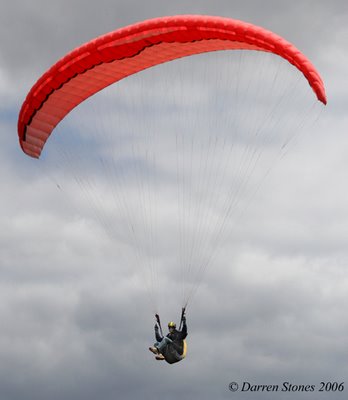
Ethan Glessich - Airborne above Bells Beach


Ethan said that when the parachute is filled with air, it places a great deal of strain on the harness and his body before he lifts off. Once airborne there is no further strain on him and he just goes along for the ride.


Ethan Glessich - Acrobatic Paraglider


A young couple from Geelong was also visiting for the day and they were keen paragliders but felt the wind conditions needed to be a little more favourable for them. They were considering moving along the coast to another location where wind conditions may have been stronger.

Ethan Glessich with interested onlookers


Interestingly, the cost of a parachute and harness as used by a paraglider costs around $5000AU.

Further along the Great Ocean Road at Lorne, I met another day tripper from Melbourne who was beach fishing with a friend at the eastern end of the main beach at Lorne.

Beach fishing - Lorne


“We’re trying to catch snapper, whiting, flathead or sting rays,” he said. “We come down here during the summer months as it’s the best time for catching them, but if we don’t have any luck here, we’ll go around to the pier and try there.”

The Great Ocean Road provides numerous activities for many people. Paragliding and fishing are two hobbies that are actively pursued along this marvellous piece of coastline.

Recommendations

____________

Accommodation

Lightkeepers Inn Motel - Aireys Inlet

Lorne Hotel - Lorne

Sandridge Motel - Lorne

Meals

Aireys Inlet Hotel

Lorne Hotel - Lorne

Attractions

Split Point Lighthouse - Aireys Inlet

See & Do - Lorne

Visitor Information

Lorne Visitor Information Centre

Torquay Visitor Information Centre

How to get there

From Melbourne